Resources

News, updates, and information about Quintillion’s projects and Alaska’s fiber network

Follow Quintillion’s latest news, including project progress, new grants, and upcoming network enhancements for Alaska communities.

Quintillion logo
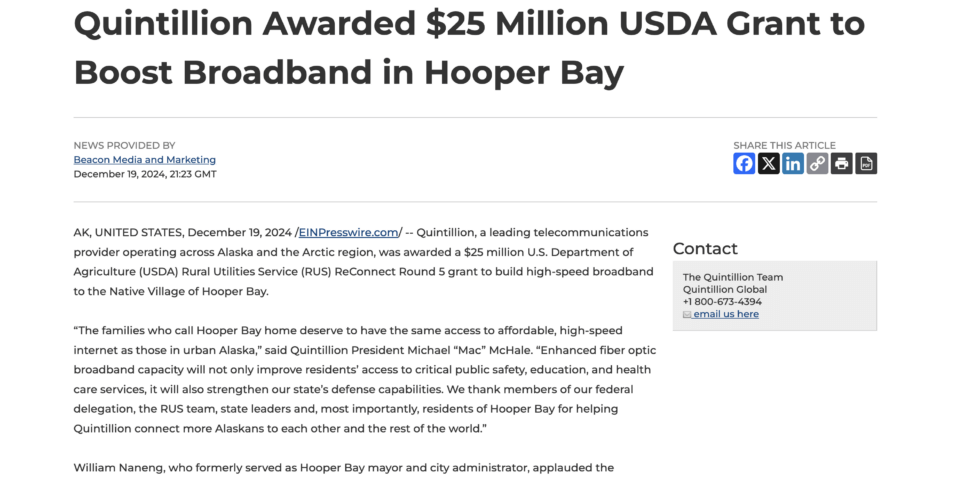
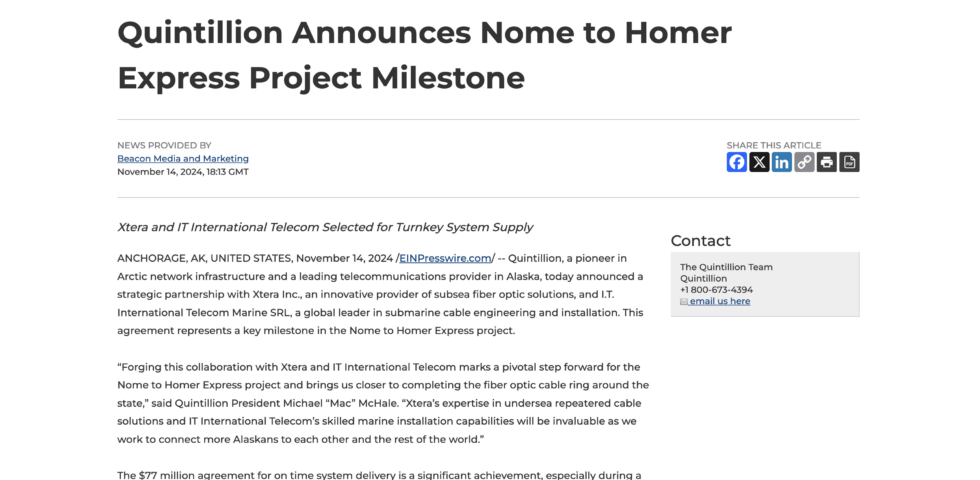
“Quintillion is proud to have completed the self-funded multimillion-dollar marine survey to expedite the buildout of this critical project,” said President Michael “Mac” McHale.
Quintillion logo
It is with sincere gratitude that we thank you for your unwavering support and understanding throughout this challenging period.
Quintillion logo
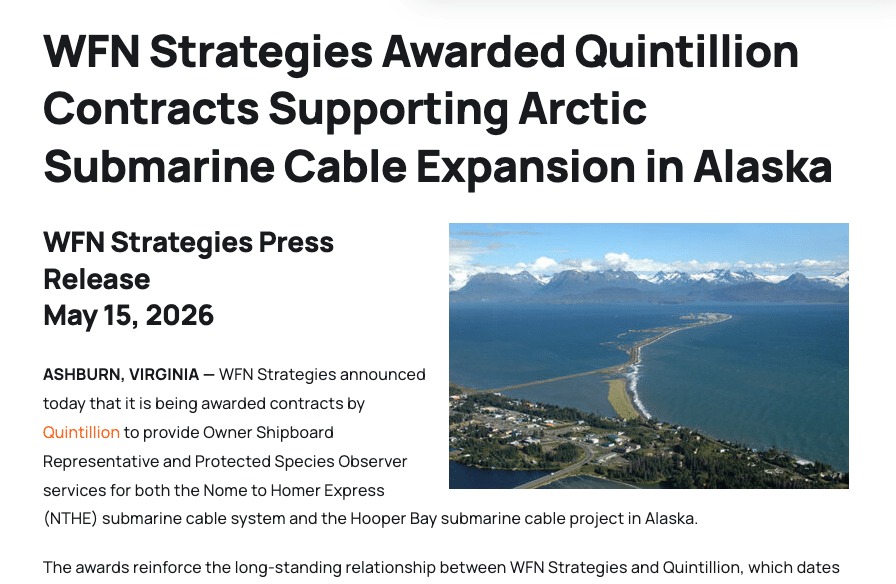
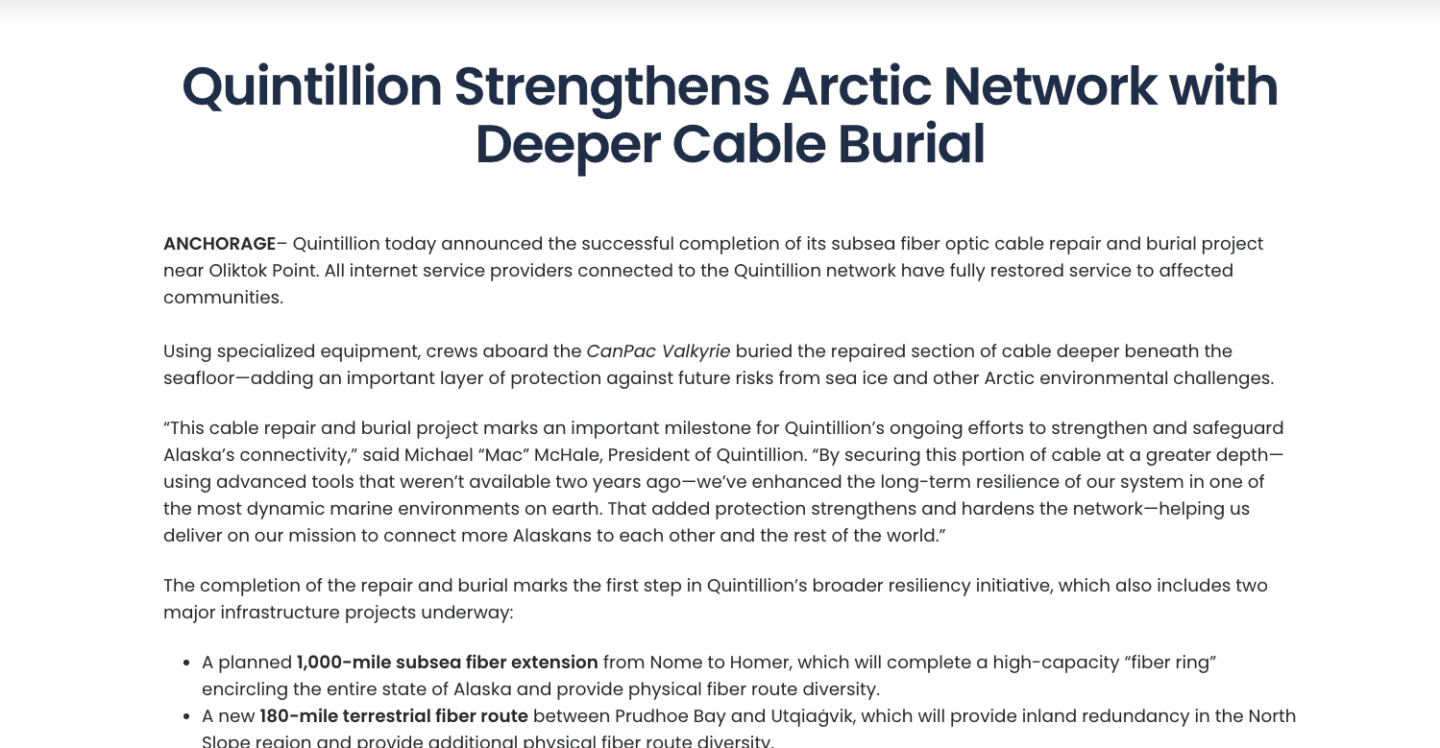
Quintillion announced today that the repair work on its submarine cable, cut by ice north of Oliktok Point, is complete and service to customers has been fully restored.

In-depth articles about fiber infrastructure, Alaska connectivity challenges, and telecommunications technology

Military personnel monitoring maps and intelligence data on multiple screens in a command center
Subsea cables are the foundation of today’s internet, with over 95% of international data and voice transfers being routed through subsea fiber optic cables. Cables run along the ocean floor are also essential within the US, making it possible for Alaska, Hawaii, and US territories to connect with states in the lower 48. And with…
Engineer in a lab coat working with wiring and electronic equipment in a technology lab
On November 4th, Google celebrated the 88th birthday of Nobel-prize winner Charles K. Kao, a physicist and educator considered the “father of fiber optics.” While Kao died in 2018, his legacy continued on as fiber optics continues to support our increasingly digital world and make it possible to connect even the most remote parts of…
Quintillion website preview
A few months ago, our team at Quintillion decided we needed a new website that captured our innovative character and mission. We’re now proud to officially announce that our vision has become a reality. In this blog post, we’ll walk you through parts of our creative process and highlight some of our favorite new features.…
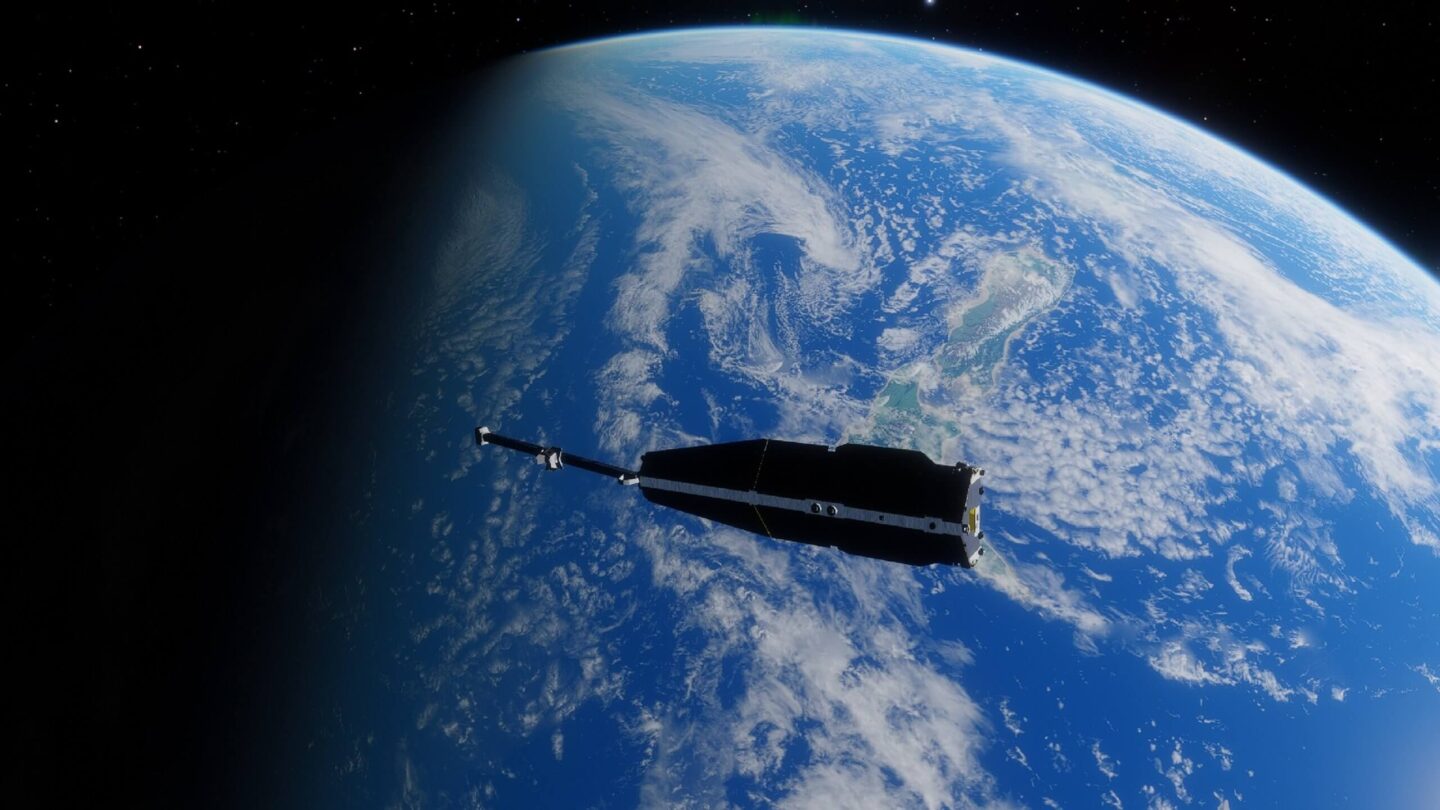
polar orbiting satellite in space
While some people may view fiber optics and satellites as two competing technologies, the Quintillion network marries the two. Satellite technology plays many essential roles in today’s digital world. For one, satellites can provide wireless internet service to most locations, helping fill gaps where environmental obstacles make fiber difficult or impossible to build. This technology…
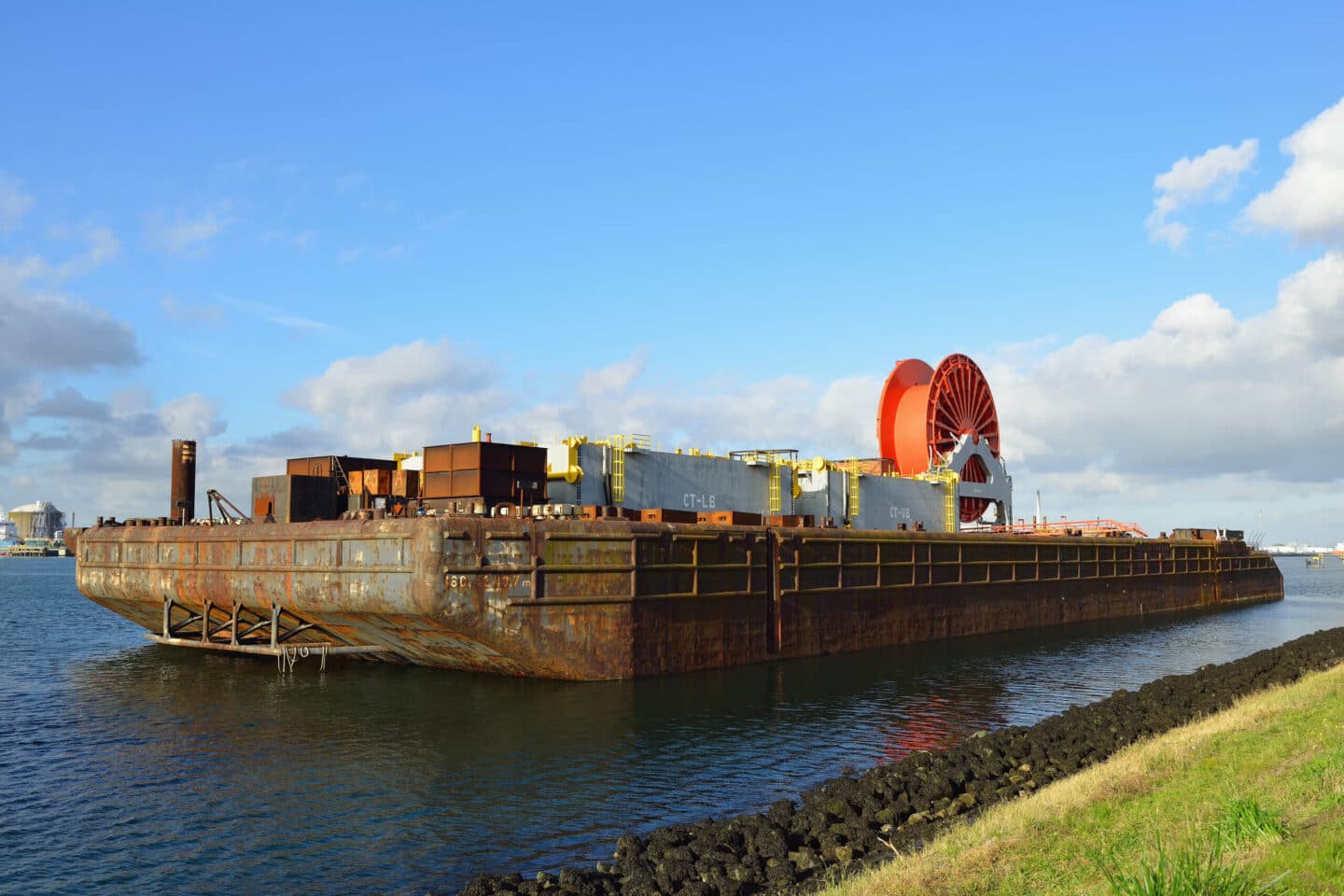
Large industrial barge with heavy equipment and a red cable reel docked along the shoreline
While many people rely on the internet for everyday activities, the 2019 US Census found that approximately 10% of Americans have no internet access. Americans living in urban areas often have multiple choices for internet service, including fiber optic, DSL, cable, satellite, and fixed wireless, but rural locations are limited to what systems are available…
Abandoned boats and whale bone arch on a wet, muddy Arctic shoreline under cloudy skies
The Arctic is not the same landscape today that it was decades, even years, ago. The effect climate change has had on the Arctic is a dire one, causing it to warm almost twice as quickly as the global average. Ice reduction is occurring at a rapid rate, with areas larger than the countries of…
Aerial view of large white fuel storage tanks near a small mountain town surrounded by snowy peaks
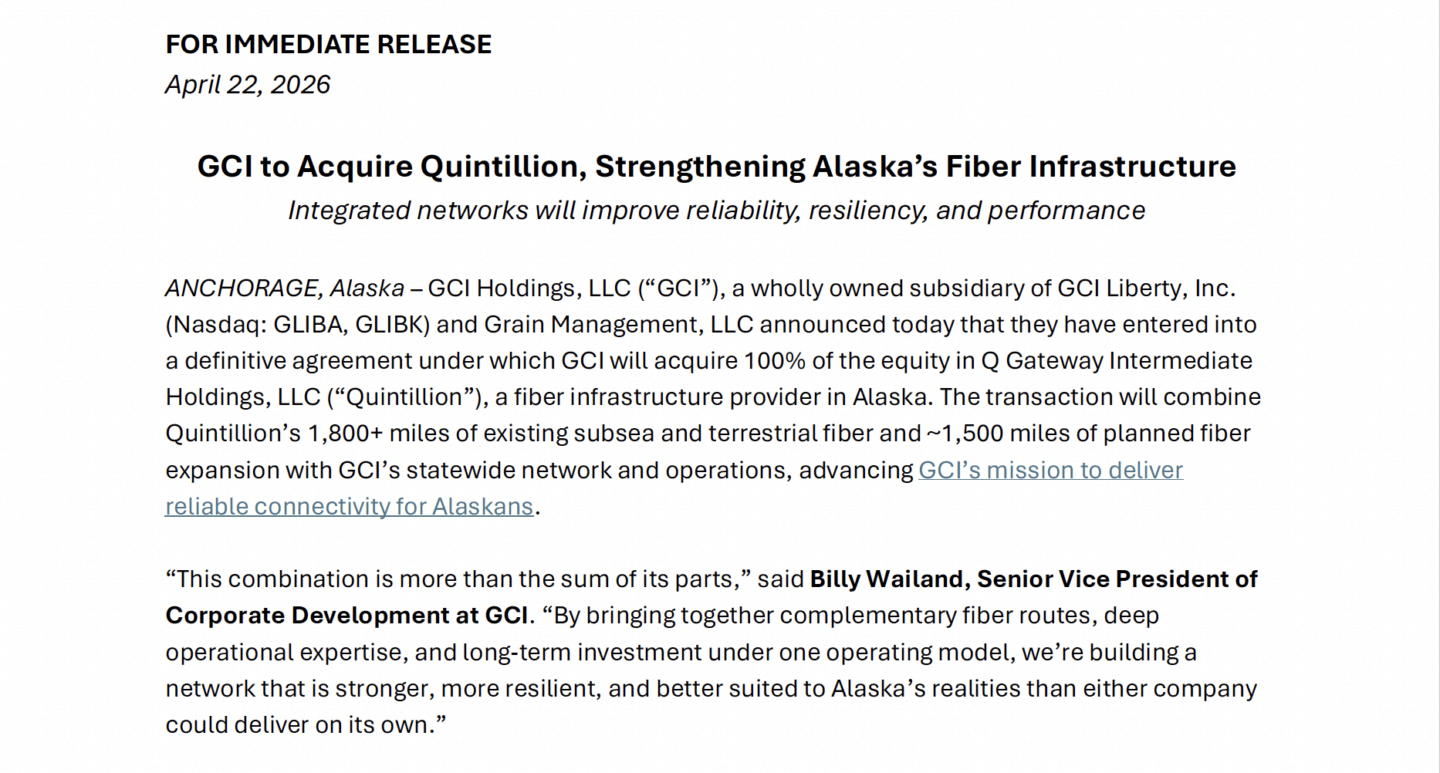
Quintillion is a visionary company looking to improve connectivity and security in the US Arctic. We’ve done what no other telecommunications operator has done before: we built North America’s first and only subsea and terrestrial optic cable network in the Arctic. What’s in our pipeline? Our innovative team is working to expand our network to…
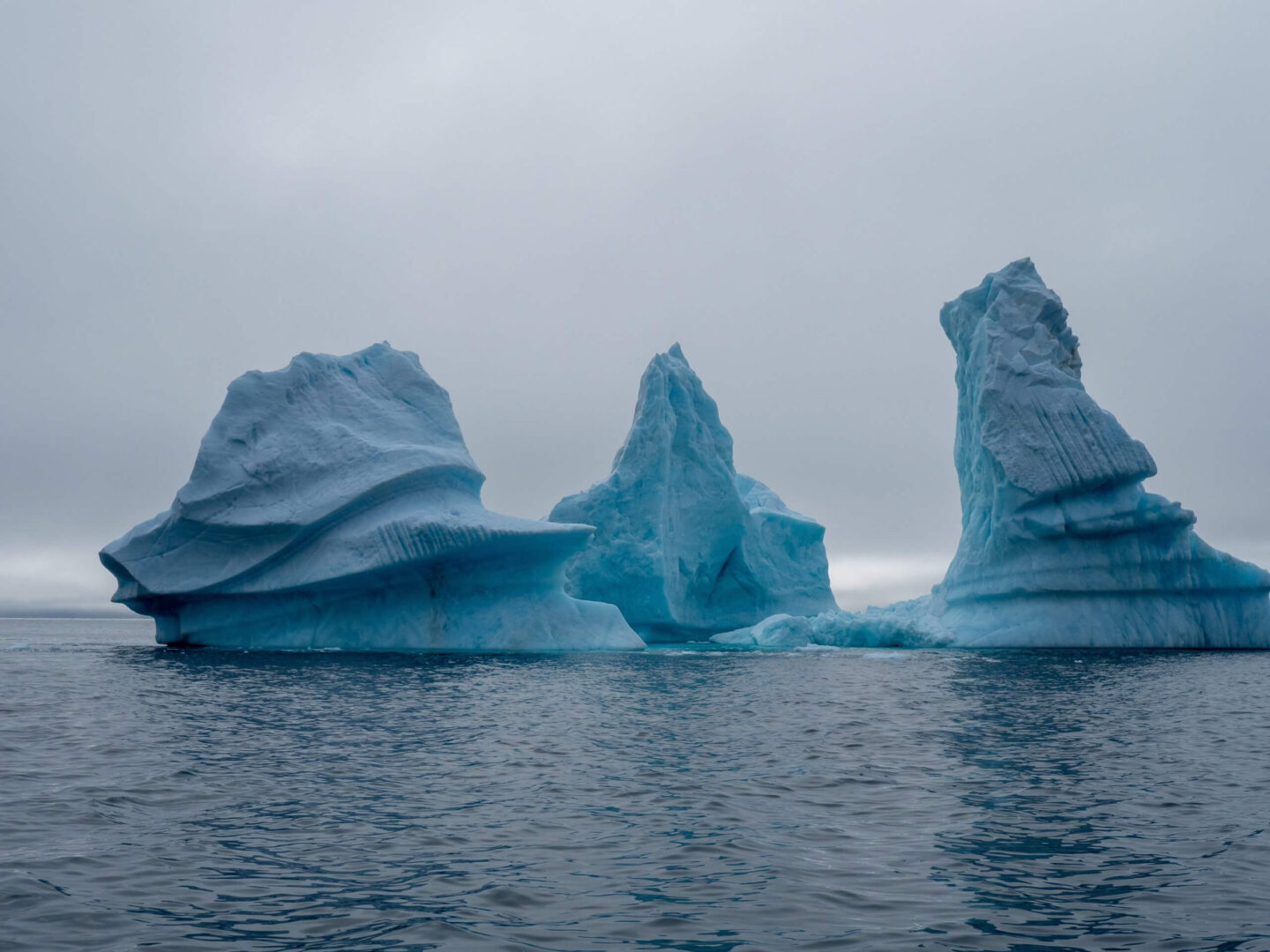
icebergs in ocean
If you’ve been following our story, then you likely already know that Quintillion is the first and only telecommunications operator to build a subsea and terrestrial fiber optic cable network in the US Arctic. This extensive cable system spans more than 1,700 miles along the Alaska coast and has brought the reliability and affordability of…
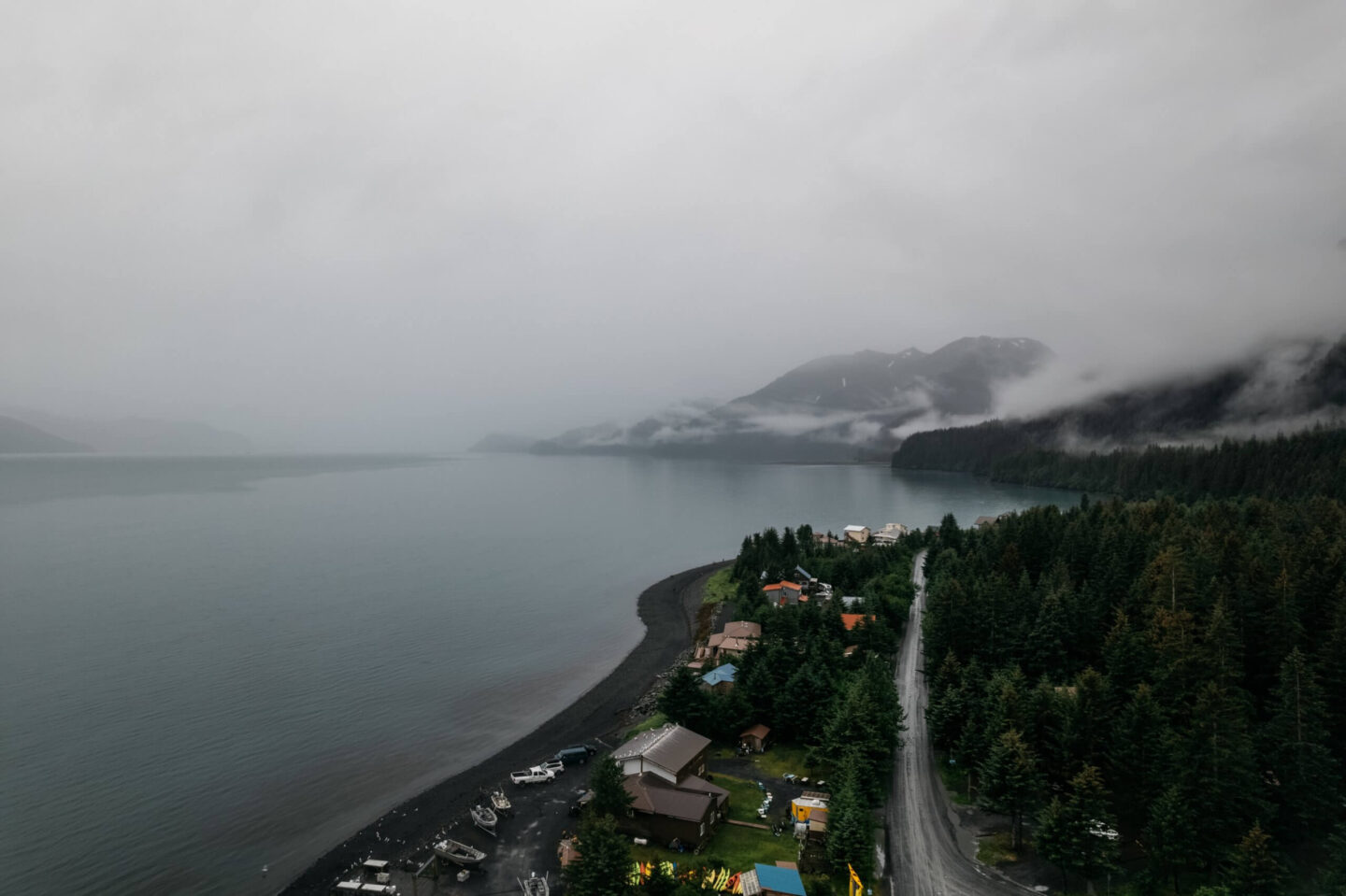
Foggy coastal landscape with a forested shoreline, mountains, and small homes along a winding road
Rural Alaska takes up a great portion of the state, housing approximately 150 communities and more than 60,000 residents. Stretching from the Bristol Bay area to the North Slope oil fields, the Alaskan Arctic contains a diverse set of landscapes, unparalleled in their natural beauty. However, a stunted economy, few educational opportunities, and a general…
Sunlight breaking through clouds over snow-capped mountains, forest, and winding river at sunset
Connectivity has been a long-standing issue for the Arctic. For most remote areas in Alaska, not having access to a reliable communication structure leaves communities unprepared to respond to emergencies, hinders communication, and stunts economic growth. Quintillion, a leading provider of high-speed broadband networks based in Anchorage, Alaska, has pioneered efforts to connect the Arctic…

Common questions about Quintillion, our projects, and Alaska fiber infrastructure

About Quintillion

What is Quintillion?

Quintillion is Alaska's premier fiber optic network provider, dedicated to connecting communities across the state with high-speed, reliable internet infrastructure. We combine private investment with federal, state, and local grants to build telecommunications infrastructure specifically designed for Alaska's unique challenges.

What areas does Quintillion serve?

We serve communities throughout Alaska, with active projects spanning from Nome to Homer along the coast, terrestrial routes across the interior, and connections to Arctic communities. Our current project portfolio includes 48 communities across over 2,350 miles of fiber infrastructure. See our Projects page for specific coverage areas and communities currently being served or planned for future connection.

How is Quintillion different from other providers?

We focus exclusively on Alaska, combining private investment with strategic grant funding to build infrastructure specifically designed for Alaska's unique challenges. Our network emphasizes resiliency, redundancy, and diversity—three principles that ensure reliable connectivity even in Alaska's harsh conditions. Unlike providers that simply extend existing infrastructure, we engineer solutions specifically for Alaska's environment, geography, and distribution of communities.

Technology & Infrastructure

What is fiber optic technology?

Fiber optic cables use light pulses traveling through thin glass fibers to transmit data at extremely high speeds over long distances. Unlike copper cables or wireless technologies, fiber offers virtually unlimited bandwidth, minimal signal degradation over distance, and immunity to electromagnetic interference. This makes it the gold standard for modern telecommunications infrastructure and the foundation of Alaska's digital future.

What does "resiliency, redundancy, and diversity" mean?

These are the three core principles of our network design. Resiliency means building infrastructure that withstands Alaska's extreme conditions. Redundancy means having multiple paths for data so that if one route fails, traffic automatically reroutes. Diversity means using varied infrastructure types (subsea, terrestrial, different cable paths) to minimize the risk of any single event affecting the entire network. Together, these principles ensure reliable connectivity year-round.

How does Quintillion's infrastructure handle Alaska's harsh conditions?

We use specialized equipment and techniques designed for extreme environments. This includes cables rated for -60°F temperatures, heavy armor protection against ice and anchors for subsea routes, permafrost- compatible installation methods for terrestrial routes, seismic engineering for equipment sites, and backup power systems at all locations. Every component is selected and installed with Alaska's unique challenges in mind.

Projects & Funding

How are Quintillion projects funded?

We use a combination of private investment and public grants. Quintillion brings significant private capital to each project, then maximizes that investment by securing federal grants (NTIA, USDA, and others), state of Alaska funding, and local partnerships. This blended funding model allows us to serve both commercially viable areas and underserved communities that need connectivity but wouldn't attract purely commercial investment.

How long does it take to build a fiber project?

Project timelines vary significantly based on scope, route length, environmental conditions, and permitting requirements. A typical major project progresses through community assessment (3-6 months), technical planning and permitting (6-12 months), funding assembly (6-18 months), construction (12-36 months depending on route length and conditions), and testing/activation (2-4 months). We work to minimize timelines while ensuring projects are done right.

Can my community request fiber connectivity?

Yes! We're always interested in hearing from Alaska communities about their connectivity needs. Contact us through our website with information about your community, current connectivity challenges, and specific needs. We evaluate potential projects based on community need, technical feasibility, funding availability, and strategic network value. Even if we can't begin a project immediately, we want to understand where Alaska's connectivity gaps are.

If you didn’t find the answer you were looking for, we’re here to help. Contact our team with your specific questions about Quintillion’s projects, services, or Alaska fiber infrastructure.

Media Inquiries

For press inquiries, interview requests, and media resources, please contact our communications team

Media Contact

Our media team can provide project updates, technical backgrounders, executive interviews, and high-resolution images for publication.