
Traditional single-path networks do not withstand the state’s environmental demands or operational risks. Severe storms, ice movement, seismic activity, and vast distances require a fundamentally different architecture. That’s why our system is built on three core principles—resiliency, redundancy, and diversity—to ensure communities and organizations stay connected when it matters most.

Resiliency
Built to withstand Alaska's extremes
Extreme Weather Protection
All infrastructure is rated for Arctic conditions, with specialized cable jacketing, hardened equipment enclosures, and heating systems where necessary. Our subsea cables are armored against ice scour and anchors.
Seismic Engineering
Rapid Recovery Protocols
24/7 Monitoring

Redundancy
Built-in protection keeps the network running
Automatic Failover
Redundant Network Paths
Resilient System Design
Backup Power Systems

Diversity
Different routes for reduced risk
Subsea & Terrestrial Routes
Multiple Carrier Interconnections
Nome to Homer Route Diversity
Strategic Landing Points
Our network spans Alaska with subsea and terrestrial fiber routes, creating multiple pathways for reliable connectivity. The map below shows our major routes and the diversity they create.
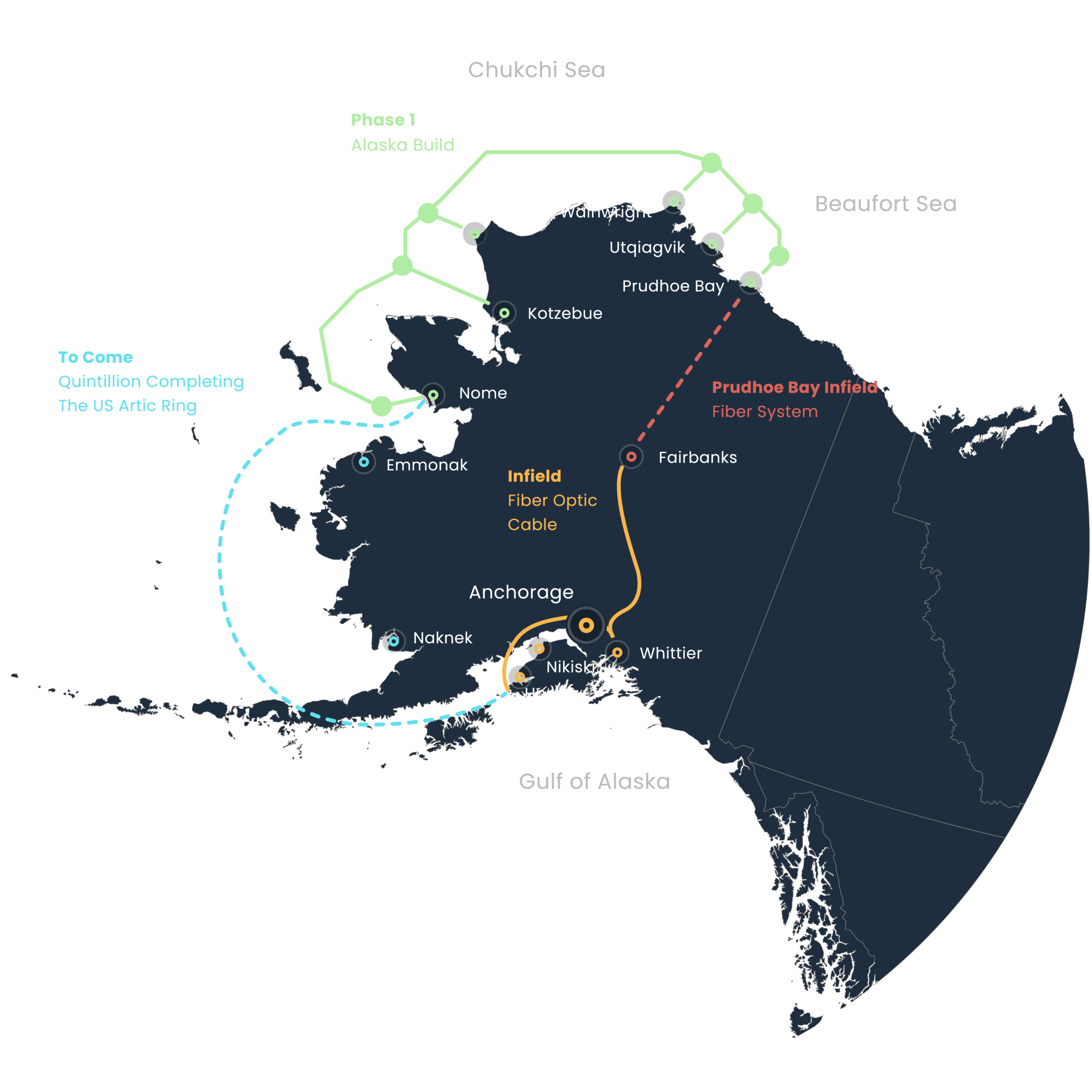
Alaska’s geography and climate present unique telecommunications challenges. Traditional single-path networks are vulnerable to disruption from weather events, equipment failures, seismic activity, or natural disasters.
Industry Standards
All Quintillion infrastructure meets or exceeds industry standards for telecommunications networks. We use proven technologies from leading equipment manufacturers and follow best practices for optical fiber deployment.
Alaska-Specific Adaptations
While we follow industry standards, we adapt our designs for Alaska's unique conditions. This includes enhanced environmental protection, extended temperature ranges, and specialized installation techniques.